Follow‑Up Etiquette
Follow-Up Etiquette means communicating professionally after an interview, meeting, application, enquiry, or professional interaction to express thanks, confirm interest, request updates, or maintain a positive relationship.
What is Follow-Up Etiquette?
Follow-up etiquette is the professional way of communicating after an important interaction. In interviews, it may include sending a thank-you message, confirming your continued interest, asking about the next steps, or politely requesting an update after a reasonable time.
A good follow-up should be polite, brief, timely, and respectful. It should not sound impatient, demanding, emotional, or careless.
| Situation | Poor Follow-Up | Professional Follow-Up |
|---|---|---|
| After interview | Did I get selected? Reply fast. | Thank you for the opportunity. I appreciate your time and look forward to the next steps. |
| No response after a week | Why have you not replied yet? | I wanted to politely check if there is any update regarding the selection process. |
| After receiving rejection | This is unfair. I should have been selected. | Thank you for informing me. I appreciate the opportunity and will continue improving. |
| After referral/help | Okay. | Thank you for your guidance and support. I truly appreciate your time. |
“A professional follow-up keeps the door open, even when the outcome is uncertain.”
Career Communication Tip
Key points
- Send a thank-you message after the interview.
- Keep the message short and respectful.
- Use a clear subject line.
- Mention the role or interview context.
- Confirm your interest politely.
- Wait a reasonable time before asking for updates.
- Accept the final outcome professionally.
Why is Follow-Up Etiquette Important?
Follow-up communication shows gratitude, seriousness, maturity, and professionalism. It also helps maintain a positive impression after the interview or meeting.
Shows Gratitude
A thank-you message shows respect for the interviewer’s time.
- Politeness
- Respect
- Positive attitude
- Professional courtesy
Reinforces Interest
It confirms that you are still interested in the opportunity.
- Role interest
- Career focus
- Seriousness
- Commitment
Creates Professional Image
A well-written message reflects communication maturity.
- Written clarity
- Professional tone
- Good etiquette
- Attention to detail
Maintains Relationship
Professional follow-ups keep future opportunities open.
- Networking
- Goodwill
- Future referrals
- Positive recall
Types of Professional Follow-Up
Follow-up messages can be used for different purposes. The tone and timing should match the situation.
| Follow-Up Type | Purpose | Recommended Timing |
|---|---|---|
| Thank-You Follow-Up | To thank the interviewer or professional contact for their time. | Within 24 hours after interview or meeting. |
| Status Follow-Up | To politely ask whether there is any update. | After the timeline given by the interviewer, or after about one week if no timeline was given. |
| Document Follow-Up | To send requested documents, portfolio, assignment, or clarification. | As soon as possible, preferably within the requested deadline. |
| Clarification Follow-Up | To clarify next steps, requirements, or information discussed. | Soon after the discussion, while the matter is still fresh. |
| Rejection Response | To respond professionally after not being selected. | After receiving the result. |
| Networking Follow-Up | To maintain contact after a professional interaction. | Within a few days of the interaction. |
Mini Follow-Up Strategy Bank
Tip: A follow-up message should be useful, polite, and easy for the receiver to respond to.
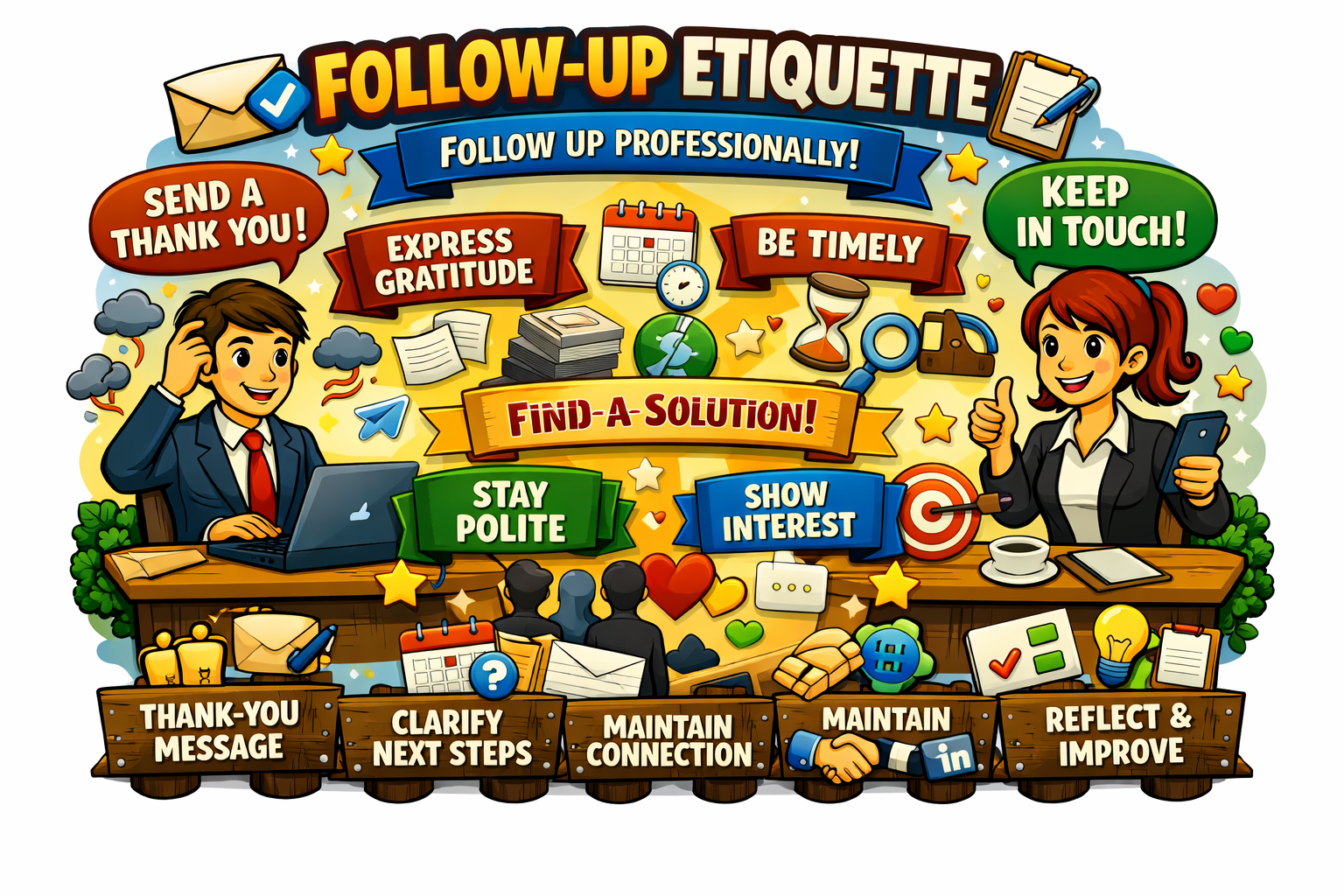
Structure of a Good Follow-Up Message
A professional follow-up message should have a clear subject, polite greeting, short purpose, relevant context, and respectful closing.
| Part | Purpose | Example |
|---|---|---|
| Subject Line | Clearly tells the purpose of the email. | Thank You – Interview for Marketing Associate Role |
| Greeting | Starts the message politely. | Dear Sir/Madam, / Dear Mr. Sharma, |
| Thank You / Context | Mentions the interview, meeting, or discussion. | Thank you for taking the time to speak with me today. |
| Main Purpose | States why you are writing. | I wanted to express my continued interest in the role. |
| Optional Reminder | Briefly reminds them of your suitability or shared discussion. | I enjoyed learning about the team’s work and believe my skills match the requirement. |
| Closing | Ends respectfully. | Thank you again for your time and consideration. |
| Signature | Provides your identity and contact details. | Regards, Your Name, Phone, Email |
Sample Follow-Up Messages
| Situation | Sample Message |
|---|---|
| Thank-you after interview |
Dear Sir/Madam, Thank you for taking the time to interview me for the role today. I appreciate the opportunity to discuss my skills and learn more about the position. I remain interested in the role and look forward to the next steps. Regards, Your Name |
| Status follow-up |
Dear Sir/Madam, I hope you are doing well. I wanted to politely check if there is any update regarding the interview process for the role. I appreciate your time and consideration. Regards, Your Name |
| Sending requested documents |
Dear Sir/Madam, As requested, I am attaching the required documents for your reference. Please let me know if any further information is needed. Regards, Your Name |
| After rejection |
Dear Sir/Madam, Thank you for informing me about the decision. I appreciate the opportunity to interview and learn more about the role. I will continue improving and hope to be considered for suitable opportunities in the future. Regards, Your Name |
| After professional guidance |
Dear Sir/Madam, Thank you for your guidance and valuable suggestions. I appreciate the time you spent explaining the process and helping me understand the next steps. Regards, Your Name |
Note: Always customise the message according to the role, person, organisation, and discussion.
Follow-Up Timing and Frequency
Good follow-up etiquette also depends on timing. Sending too many messages can create a negative impression.
| Situation | Recommended Timing | Frequency Advice |
|---|---|---|
| After interview thank-you | Within 24 hours. | Send once. |
| Status update when timeline is given | Wait until the timeline has passed. | Send one polite follow-up. |
| Status update when no timeline is given | Wait about one week before following up. | Avoid repeated daily messages. |
| Requested document submission | Send as early as possible within the deadline. | Send once with complete attachments. |
| No response after follow-up | Wait several more days before considering one final follow-up. | Do not send repeated reminders too frequently. |
Follow-Up Do’s and Don’ts
| Do | Don’t |
|---|---|
| Use a clear subject line. | Send an email with a blank or vague subject. |
| Keep the message short and polite. | Write long emotional messages. |
| Thank the person for their time. | Sound demanding or impatient. |
| Mention the role or meeting context. | Expect the receiver to remember everything automatically. |
| Proofread before sending. | Send messages with spelling errors or wrong names. |
| Attach required documents properly. | Forget attachments or send wrong files. |
| Respect the process and timeline. | Send repeated reminders every day. |
| Accept the outcome professionally. | Argue after rejection or blame the organisation. |
Note: Follow-up etiquette is part of your professional reputation.
Common Follow-Up Mistakes and Better Approaches
| Mistake | Possible Impact | Better Approach |
|---|---|---|
| No follow-up after interview | Missed opportunity to show gratitude and interest. | Send a short thank-you message within 24 hours. |
| Following up too soon | May appear impatient. | Wait until the expected timeline passes. |
| Using casual language | Creates unprofessional impression. | Use polite and formal wording. |
| Sending repeated messages | May irritate the receiver. | Send one polite follow-up and wait. |
| Wrong name or role | Shows carelessness. | Check the name, role, organisation, and spelling before sending. |
| Emotional response after rejection | Damages future opportunity. | Reply with thanks and maturity. |
Step-by-Step Follow-Up Process
Use this process to prepare any professional follow-up message.
| Step | Action | Question to Ask Yourself |
|---|---|---|
| 1. Identify Purpose | Decide why you are following up. | Am I thanking, sending documents, or asking for status? |
| 2. Check Timing | Make sure the timing is appropriate. | Is this too early, too late, or just right? |
| 3. Write Subject | Create a clear and specific subject line. | Will the receiver understand the email purpose immediately? |
| 4. Add Context | Mention interview, role, date, meeting, or document reference. | Have I given enough context? |
| 5. Keep It Brief | Write short, polite, and focused content. | Can the message be understood quickly? |
| 6. Proofread | Check name, grammar, attachments, and tone. | Is the message professional and error-free? |
| 7. Send and Wait | Send once and wait respectfully for response. | Am I respecting the receiver’s time? |
Practice
A) Multiple Choice Questions
-
Follow-up etiquette means:
sending angry messages after delay communicating politely and professionally after an interaction calling repeatedly every hour ignoring professional communication
-
A thank-you message after an interview should ideally be sent:
within 24 hours after one year before entering interview room only if selected
-
A good follow-up message should be:
polite, brief, and clear rude and demanding full of complaints without subject line
-
If no selection timeline was given, a status follow-up can usually be sent:
after a reasonable time, such as about one week every hour immediately after leaving the interview only after ten years
-
After rejection, the professional response is to:
argue emotionally thank them and continue improving send angry messages blame the interviewer
B) Situation-Based Practice
- You completed an interview today. Write a professional thank-you follow-up. (Hint: thank them, mention role, confirm interest, close politely.)
- One week has passed after an interview and no timeline was given. How will you ask for an update? (Hint: polite status check, no pressure.)
- You forgot to attach a requested document. What should you do? (Hint: apologise briefly and send correct attachment immediately.)
- You received a rejection email. How will you respond professionally? (Hint: thank them, appreciate opportunity, continue improving.)
- You want to follow up but feel impatient. What should you check before sending? (Hint: timing, tone, purpose, and whether timeline has passed.)
C) Match the Follow-Up Type with Its Purpose
| Follow-Up Type | Purpose |
|---|---|
| Thank-you follow-up | Shows gratitude after interview or meeting |
| Status follow-up | Politely asks for update after reasonable time |
| Document follow-up | Sends requested documents or information |
| Rejection response | Maintains professionalism after not being selected |
| Networking follow-up | Maintains professional relationship after interaction |
Follow-Up Etiquette Reminder
Follow-up etiquette is an important part of professional communication. A good follow-up message is polite, short, timely, and purposeful. It can express thanks, confirm interest, send documents, request updates, or maintain a professional relationship. Poor follow-ups can damage the impression created during the interview.
Task: Prepare three follow-up templates: thank-you after interview, status update request, and rejection response.
Show Suggested Answers
Multiple Choice
- communicating politely and professionally after an interaction
- within 24 hours
- polite, brief, and clear
- after a reasonable time, such as about one week
- thank them and continue improving
Situation-Based Practice: Sample Answers
- Dear Sir/Madam, Thank you for taking the time to interview me today. I appreciate the opportunity to discuss the role and remain interested in the position. I look forward to the next steps. Regards, Your Name.
- Dear Sir/Madam, I hope you are doing well. I wanted to politely check if there is any update regarding the interview process. Thank you for your time and consideration.
- Apologise briefly and send the correct attachment immediately: “I apologise for missing the attachment in my previous email. Please find the required document attached.”
- Thank them for informing you, appreciate the opportunity, and mention that you will continue improving for future opportunities.
- Check whether enough time has passed, whether your tone is polite, whether the purpose is clear, and whether the message is necessary.
Follow-Up Type Matching
- Thank-you follow-up → Shows gratitude after interview or meeting
- Status follow-up → Politely asks for update after reasonable time
- Document follow-up → Sends requested documents or information
- Rejection response → Maintains professionalism after not being selected
- Networking follow-up → Maintains professional relationship after interaction
Clue Explanation
Follow-up etiquette requires timing, courtesy, clarity, proper subject line, relevant context, respectful tone, proofreading, and patience after sending.
Practical tips
- Send a thank-you message within 24 hours.
- Use a clear and specific subject line.
- Keep messages short and professional.
- Mention the role, date, or interview context.
- Proofread before sending.
- Check attachments before email submission.
- Do not send repeated reminders too frequently.
- Respond to rejection with maturity and gratitude.
Select a topic and chapter from the left menu.