Presentation & Professionalism
Presentation & Professionalism refers to the way a person communicates, behaves, appears, prepares, and conducts themselves in academic, interview, workplace, and public situations.
What is Presentation & Professionalism?
Presentation is the way you express ideas, speak, organise information, use body language, and create an impression before others.
Professionalism is the way you behave with responsibility, discipline, respect, honesty, punctuality, and maturity in formal or work-related situations.
Together, presentation and professionalism help a person appear confident, trustworthy, capable, and ready for academic, career, and workplace opportunities.
| Area | Poor Approach | Professional Approach |
|---|---|---|
| Communication | Speaking unclearly or casually in formal situations. | Speaking clearly, respectfully, and to the point. |
| Appearance | Untidy or inappropriate dressing. | Neat, clean, and suitable appearance. |
| Time | Arriving late or missing deadlines. | Being punctual and respecting others’ time. |
| Responsibility | Making excuses or blaming others. | Taking ownership and completing commitments. |
“Professionalism is shown not only by what you know, but by how you conduct yourself.”
Career Readiness Tip
Key points
- Present yourself clearly and confidently.
- Maintain neat and appropriate appearance.
- Use respectful communication.
- Be punctual and prepared.
- Take responsibility for your work.
- Respect people, rules, and commitments.
- Build trust through consistent behaviour.
Why are Presentation & Professionalism Important?
Presentation and professionalism influence how others judge your readiness, seriousness, reliability, communication ability, and suitability for opportunities.
Creates Good Impression
People form impressions based on behaviour, appearance, and communication.
- Neat appearance
- Confident introduction
- Positive body language
- Clear speech
Builds Trust
Professional conduct shows that a person can be trusted with responsibility.
- Reliability
- Honesty
- Consistency
- Accountability
Improves Career Readiness
Employers value people who behave maturely and communicate well.
- Interview success
- Workplace behaviour
- Team communication
- Customer handling
Supports Leadership
Professional people influence others through discipline and example.
- Role model behaviour
- Responsible decisions
- Respectful conduct
- Clear direction
Core Components of Presentation & Professionalism
A professional person creates impact through communication, preparation, appearance, behaviour, responsibility, and emotional maturity.
| Component | Meaning | Good Practice |
|---|---|---|
| Personal Presentation | The way you appear, introduce yourself, and carry yourself. | Dress neatly, maintain posture, and present yourself confidently. |
| Verbal Communication | The words, tone, and clarity used while speaking. | Speak politely, clearly, and with purpose. |
| Non-Verbal Communication | Body language, facial expression, eye contact, and gestures. | Use natural eye contact, calm expression, and open posture. |
| Punctuality | Respecting time and deadlines. | Arrive early and complete work on or before time. |
| Responsibility | Taking ownership of tasks, behaviour, and results. | Complete commitments and inform early if there is a delay. |
| Respect | Valuing people, opinions, boundaries, and workplace norms. | Listen patiently and disagree politely. |
| Integrity | Being honest and ethical in actions and communication. | Do not exaggerate, hide mistakes, or make false claims. |
| Emotional Maturity | Managing reactions in difficult situations. | Stay calm under pressure and respond thoughtfully. |
Note: Professionalism is visible in small actions such as replying politely, being on time, keeping promises, and listening respectfully.
Mini Professionalism Strategy Bank
Tip: Professionalism is built through repeated small disciplined actions, not one-time behaviour.
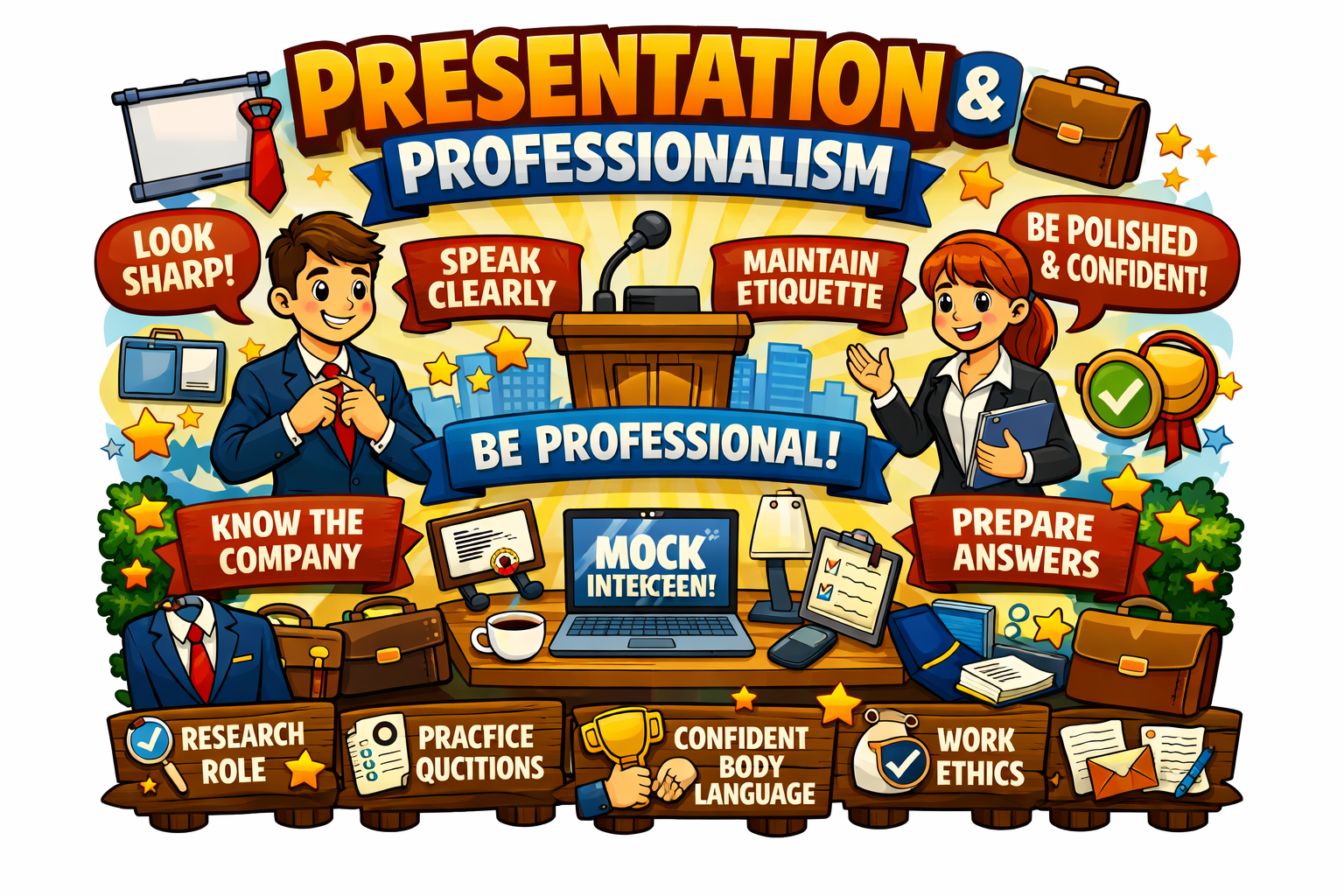
Professional Appearance and First Impression
Appearance is not about expensive clothing. It is about being neat, appropriate, organised, and respectful of the situation.
| Area | Professional Practice | Avoid |
|---|---|---|
| Dress | Wear neat, clean, and situation-appropriate clothing. | Untidy, wrinkled, or overly casual clothing in formal settings. |
| Grooming | Maintain clean and well-groomed appearance. | Careless personal hygiene or unprepared appearance. |
| Posture | Stand or sit upright with relaxed confidence. | Slouching, leaning carelessly, or appearing disinterested. |
| Eye Contact | Use natural eye contact while speaking and listening. | Looking down constantly or staring aggressively. |
| Materials | Carry documents, notebook, pen, or device in an organised way. | Searching for documents at the last minute. |
| Entry and Greeting | Enter politely, greet respectfully, and wait for instructions. | Entering casually, interrupting, or behaving impatiently. |
Professional Communication
Professional communication should be clear, polite, brief, respectful, and appropriate to the context.
| Situation | Unprofessional Communication | Professional Communication |
|---|---|---|
| Asking for help | I don’t understand anything. Do it for me. | I tried this section, but I need clarification on this specific part. |
| Delay in work | I could not do it. I was busy. | I apologise for the delay. I can submit the completed version by tomorrow morning. |
| Disagreement | You are wrong. | I understand your point, but I see it differently for this reason. |
| Follow-up | Any update? | Could you please let me know the current status when convenient? |
| Feedback | This is bad. | This section can be improved by adding clearer examples. |
| Thanking someone | Ok. | Thank you for your time and guidance. |
Note: Professional communication is not about using difficult words. It is about clarity, courtesy, and purpose.
Professional Behaviour in Academic and Workplace Settings
| Behaviour Area | Professional Behaviour | Poor Behaviour | Impact |
|---|---|---|---|
| Punctuality | Arriving on time and meeting deadlines. | Being late without informing. | Builds or damages reliability. |
| Accountability | Accepting responsibility and correcting mistakes. | Blaming others or hiding errors. | Builds trust and maturity. |
| Team Conduct | Cooperating, sharing updates, and respecting roles. | Working selfishly or ignoring team needs. | Improves or weakens teamwork. |
| Confidentiality | Handling sensitive information carefully. | Sharing private information casually. | Protects trust and ethics. |
| Feedback | Accepting feedback calmly and improving. | Becoming defensive or arguing emotionally. | Supports growth and learning. |
| Digital Behaviour | Writing respectful emails/messages and using devices appropriately. | Informal, rude, careless, or delayed responses. | Creates professional or careless image. |
Presentation in Professional Situations
Professional presentation is required in interviews, meetings, seminars, group discussions, project reviews, customer interactions, and workplace reporting.
| Situation | What to Present | Professional Focus |
|---|---|---|
| Interview | Your background, skills, achievements, and suitability. | Be honest, clear, confident, and relevant. |
| Project Presentation | Problem, method, result, learning, and conclusion. | Use structure, examples, and simple visuals. |
| Team Meeting | Progress, issues, decisions, and next steps. | Be brief, factual, and action-oriented. |
| Customer Interaction | Service details, response, solution, and support. | Be patient, polite, and solution-focused. |
| Email / Message | Purpose, details, request, deadline, and closing. | Use clear subject, respectful language, and proper formatting. |
| Public Speaking | Main message, supporting points, examples, and conclusion. | Maintain confidence, voice control, and audience connection. |
Note: A professional presentation is focused on the audience’s understanding, not only on the speaker’s knowledge.
Digital Professionalism
Digital professionalism is important because many formal interactions happen through email, messaging platforms, video calls, online meetings, and professional profiles.
| Digital Area | Professional Practice | Avoid |
|---|---|---|
| Use clear subject, greeting, purpose, details, and closing. | Blank subject, casual language, unclear request. | |
| Messages | Keep messages polite, brief, and context-based. | Sending incomplete or rude messages. |
| Video Meetings | Check camera, audio, background, lighting, and punctuality. | Joining late, noisy background, poor audio, careless appearance. |
| Professional Profile | Keep profile photo, headline, skills, and experience updated. | Unprofessional photos or exaggerated claims. |
| File Sharing | Name files clearly and share correct versions. | Sending wrong files, vague file names, or incomplete attachments. |
| Response Time | Respond within a reasonable time or acknowledge delay. | Ignoring important communication for too long. |
Common Mistakes and Better Approaches
| Common Mistake | Possible Impact | Better Approach |
|---|---|---|
| Poor preparation | Creates nervousness and weak performance. | Prepare content, documents, dress, and timing in advance. |
| Casual communication | May appear careless or disrespectful. | Use polite, clear, and appropriate language. |
| Ignoring body language | May show nervousness, disinterest, or lack of confidence. | Maintain posture, eye contact, and calm expressions. |
| Missing deadlines | Damages trust and reliability. | Plan work early and communicate delays honestly. |
| Overconfidence | May appear arrogant or unwilling to learn. | Be confident but humble and open to feedback. |
| Blaming others | Shows lack of accountability. | Accept responsibility and focus on corrective action. |
Note: Professional mistakes are corrected not by excuses, but by ownership and improvement.
Step-by-Step Development Process
Presentation and professionalism can be improved through awareness, practice, feedback, and consistent behaviour.
| Step | Action | Question to Ask Yourself |
|---|---|---|
| 1. Observe | Notice how you speak, dress, respond, and behave in formal situations. | What impression do I create? |
| 2. Identify | Find one or two areas needing improvement. | Should I improve communication, punctuality, or presentation? |
| 3. Prepare | Plan your appearance, content, documents, and behaviour for formal situations. | Am I ready before the event or meeting? |
| 4. Practise | Practise speaking, presenting, writing emails, and professional interaction. | Can I communicate clearly and confidently? |
| 5. Seek Feedback | Ask teachers, mentors, peers, or seniors for feedback. | How do others perceive my professionalism? |
| 6. Improve | Apply feedback and correct weak areas. | What specific change should I make next? |
| 7. Maintain | Practise professionalism consistently. | Am I reliable even in small tasks? |
Practice
A) Multiple Choice Questions
-
Professionalism means:
behaving carelessly showing responsibility, respect, and discipline ignoring deadlines speaking rudely
-
A good first impression is created by:
untidy appearance and late arrival neat appearance, punctuality, and polite behaviour careless communication ignoring people
-
Professional communication should be:
unclear and casual clear, polite, and purposeful rude and emotional full of false claims
-
If your work is delayed, the professional response is to:
hide the delay inform early, apologise, and give a realistic timeline blame others immediately ignore the task
-
Digital professionalism includes:
unclear emails and wrong attachments clear emails, proper file names, and respectful online behaviour late online joining always careless messages
B) Situation-Based Practice
- You have to attend an interview tomorrow. How will you present yourself professionally? (Hint: dress, documents, punctuality, greeting, body language.)
- You disagree with a team member’s idea. How will you respond professionally? (Hint: acknowledge, disagree respectfully, give reason.)
- You made a mistake in submitted work. What is the professional action? (Hint: accept, inform, correct, prevent repetition.)
- You need to send a project file by email. What should you check before sending? (Hint: subject, greeting, attachment, file name, message clarity.)
- You are joining an online meeting. What professional steps should you follow? (Hint: join early, test audio/video, quiet background, polite greeting.)
C) Match the Professional Skill with Its Use
| Professional Skill | Use |
|---|---|
| Punctuality | Shows respect for time and reliability |
| Clear communication | Reduces confusion and improves understanding |
| Accountability | Shows ownership of work and mistakes |
| Professional appearance | Creates a positive first impression |
| Digital professionalism | Maintains reputation in online communication |
Professionalism Reminder
Presentation and professionalism are essential for interviews, academic activities, workplace success, public speaking, teamwork, and leadership. A professional person communicates respectfully, prepares properly, presents themselves neatly, respects time, accepts responsibility, and builds trust through consistent behaviour.
Task: Prepare a personal professionalism checklist for your next interview, seminar, or formal meeting.
Show Suggested Answers
Multiple Choice
- showing responsibility, respect, and discipline
- neat appearance, punctuality, and polite behaviour
- clear, polite, and purposeful
- inform early, apologise, and give a realistic timeline
- clear emails, proper file names, and respectful online behaviour
Situation-Based Practice: Sample Answers
- Dress neatly, keep documents ready, arrive early, greet politely, sit upright, maintain natural eye contact, and answer clearly.
- Say, “I understand your point, but I have a different view. My concern is...”, and explain your reason respectfully.
- Accept the mistake, inform the concerned person, correct it quickly, and take steps to avoid the same mistake again.
- Check the subject line, greeting, message clarity, correct attachment, file name, and polite closing before sending.
- Join a few minutes early, test internet/audio/video, use a quiet background, dress appropriately, and greet politely.
Skill Matching
- Punctuality → Shows respect for time and reliability
- Clear communication → Reduces confusion and improves understanding
- Accountability → Shows ownership of work and mistakes
- Professional appearance → Creates a positive first impression
- Digital professionalism → Maintains reputation in online communication
Clue Explanation
Presentation and professionalism include appearance, communication, punctuality, responsibility, integrity, body language, digital etiquette, preparation, and emotional maturity. Together, they create credibility and trust.
Practical tips
- Prepare before formal meetings, interviews, or presentations.
- Dress neatly and appropriately for the occasion.
- Use polite, clear, and respectful communication.
- Be punctual and meet deadlines.
- Take responsibility for mistakes and correct them.
- Maintain professional body language.
- Use proper email and digital etiquette.
- Build trust through consistent behaviour.
Select a topic and chapter from the left menu.