Goal Setting
Goal setting is the process of identifying specific objectives or targets that you want to achieve within a defined period. It involves determining what you want to accomplish, setting clear and measurable goals, and developing a plan of action to work towards those goals.
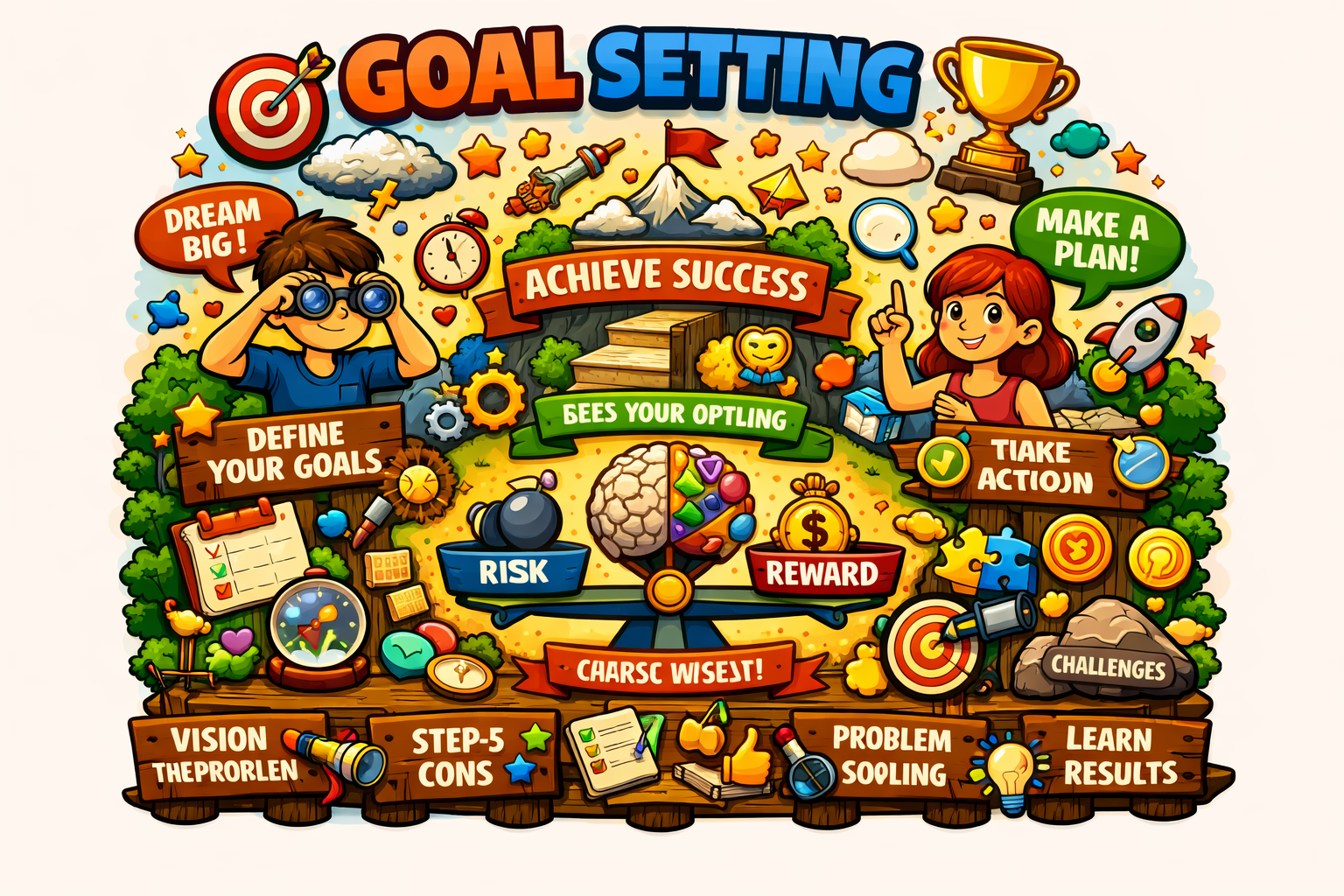
Goal Setting is the process of deciding what you want to achieve, defining clear targets, preparing an action plan, and working consistently towards meaningful results.
What is Goal Setting?
Goal setting means identifying a desired outcome and creating a practical path to reach it. A goal gives direction, purpose, motivation, and a way to measure progress.
Goals may be related to studies, career, health, communication, skills, finance, personal discipline, or professional growth. A good goal is not just a wish. It is a clear target supported by action, timeline, effort, and review.
| Situation | Weak Goal | Better Goal |
|---|---|---|
| Study | I want to study more. | I will study two chapters every day from 7 PM to 9 PM for the next 30 days. |
| Communication | I want to speak better. | I will practise one 2-minute speech daily and record it for review. |
| Career | I want a good job. | I will complete one job-related skill course and apply to five suitable jobs every week. |
| Health | I want to be fit. | I will walk for 30 minutes at least five days a week. |
“A goal without a plan remains only a wish.”
Personal Development Tip
Key points
- Know what you want to achieve.
- Make goals clear and specific.
- Set realistic deadlines.
- Break big goals into smaller tasks.
- Track progress regularly.
- Stay consistent even when motivation drops.
- Review and improve your plan.
Why is Goal Setting Important?
Goal setting helps people move from vague intentions to focused action. It improves confidence, discipline, time management, motivation, and long-term success.
Gives Direction
A clear goal tells you where to focus your energy.
- Reduces confusion
- Clarifies priorities
- Improves focus
- Guides daily action
Builds Motivation
Goals give a reason to continue effort.
- Creates purpose
- Encourages action
- Supports persistence
- Increases self-belief
Improves Planning
A goal helps convert desire into steps and timelines.
- Breaks tasks clearly
- Sets deadlines
- Organises resources
- Reduces delay
Measures Progress
Goals help you know whether you are improving.
- Tracks effort
- Shows improvement
- Identifies gaps
- Supports correction
Types of Goals
Goals can be short-term or long-term. They can also belong to different areas of life. A balanced person sets goals for learning, career, health, relationships, and personal growth.
| Goal Type | Meaning | Example |
|---|---|---|
| Short-Term Goal | A goal to be completed soon. | Complete one chapter by tonight. |
| Medium-Term Goal | A goal that may take a few weeks or months. | Improve typing speed in three months. |
| Long-Term Goal | A goal that takes months or years. | Prepare for a competitive exam within one year. |
| Academic Goal | A goal related to study and learning. | Score above 80% in the final examination. |
| Career Goal | A goal related to job, profession, or business. | Become skilled in data analysis and apply for suitable roles. |
| Personal Goal | A goal related to habits, health, discipline, or self-improvement. | Wake up at 6 AM daily for the next 30 days. |
Mini Goal Setting Strategy Bank
Tip: Write your goal where you can see it daily. Visible goals remind the mind to stay focused.
SMART Goal Framework
The SMART framework is a popular method for creating clear and achievable goals. A SMART goal is Specific, Measurable, Achievable, Relevant, and Time-bound.
| SMART Element | Meaning | Question to Ask | Example |
|---|---|---|---|
| S - Specific | The goal should be clear and exact. | What exactly do I want to achieve? | I will improve spoken English. |
| M - Measurable | The goal should be trackable. | How will I measure progress? | I will practise one 2-minute speech daily. |
| A - Achievable | The goal should be realistic. | Can I do this with available time and resources? | I will practise for 20 minutes daily. |
| R - Relevant | The goal should match your purpose. | Why is this goal important to me? | It will help in interviews and presentations. |
| T - Time-bound | The goal should have a deadline. | By when will I achieve it? | I will do this for the next 60 days. |
Step-by-Step Goal Setting Process
Goal setting becomes practical when the goal moves from idea to written plan, action, tracking, and improvement.
| Step | Action | Question to Ask |
|---|---|---|
| 1. Identify | Decide what area you want to improve or achieve. | What do I want to achieve? |
| 2. Define | Write the goal clearly and specifically. | Is my goal clear? |
| 3. Measure | Decide how progress will be measured. | How will I know I am improving? |
| 4. Plan | Break the goal into small tasks and deadlines. | What steps should I take? |
| 5. Act | Start with the first small action. | What can I do today? |
| 6. Track | Review progress daily, weekly, or monthly. | Am I following the plan? |
| 7. Improve | Adjust the plan if progress is slow. | What should I change to improve results? |
Useful Goal Planning Tools
| Tool | How to Use It | Best Used For |
|---|---|---|
| Goal Journal | Write goals, reasons, action steps, and daily progress. | Personal discipline and self-reflection. |
| Checklist | Tick tasks after completing them. | Daily or weekly goals. |
| Habit Tracker | Track repeated actions such as study, exercise, or practice. | Building consistency. |
| Vision Board | Use images or words that represent your goal. | Motivation and visual reminder. |
| Progress Review | Review what worked, what failed, and what needs adjustment. | Monthly or long-term goals. |
| Accountability Partner | Share your goal with a trusted person who checks progress. | Goals requiring discipline and follow-up. |
Note: A simple checklist used daily is more powerful than a complicated plan that is never followed.
Barriers to Goal Achievement and Better Approaches
| Barrier | How it Affects Progress | Better Approach |
|---|---|---|
| Vague goal | No clear direction or measurement. | Convert it into a SMART goal. |
| Procrastination | Delays action and increases pressure. | Start with a small 10-minute task. |
| Too many goals | Divides focus and reduces consistency. | Choose one or two priority goals first. |
| No tracking | You cannot know whether progress is happening. | Use a checklist, habit tracker, or weekly review. |
| Unrealistic deadline | Creates frustration and loss of motivation. | Set challenging but practical timelines. |
| Lack of support | Makes difficult goals harder to continue. | Seek guidance, mentor support, or accountability. |
Note: Most goals fail not because people lack ability, but because the goal is unclear, the plan is weak, or progress is not tracked.
Practice
A) Multiple Choice Questions
-
Goal setting means:
wishing without action deciding a clear target and planning action avoiding responsibility copying others blindly
-
Which is a SMART goal?
I want to improve someday. I will read one chapter daily for 30 days. I want success. I will do something later.
-
The “M” in SMART goal stands for:
Meaningless Measurable Memory Movement
-
What should you do with a large goal?
ignore it break it into smaller tasks delay it forever avoid planning
-
Which tool helps track repeated daily actions?
habit tracker random guess confusion list delay plan
B) Situation-Based Practice
- You want to improve your English speaking. Convert this into a SMART goal. (Hint: include practice time, measurable activity, and deadline.)
- You have a long-term goal of passing a competitive exam. How will you break it down? (Hint: syllabus, monthly targets, weekly revision, mock tests.)
- You often start goals but do not continue. What tool can help? (Hint: habit tracker or accountability partner.)
- Your goal is too vague: “I want to be successful.” How can you improve it? (Hint: define the area, result, timeline, and action steps.)
- You missed your goal target for one week. What should you do? (Hint: review, adjust, and restart with a practical plan.)
C) Match the Goal Setting Tool with Its Use
| Tool / Concept | Use |
|---|---|
| SMART goal | Makes a goal clear, measurable, realistic, relevant, and time-bound |
| Checklist | Tracks completion of daily or weekly tasks |
| Habit tracker | Tracks repeated actions and builds consistency |
| Progress review | Checks what worked, what failed, and what needs adjustment |
| Accountability partner | Provides support, reminders, and follow-up |
Achievement Reminder
Goal setting is a practical life skill that converts dreams into action. A person with clear goals knows what to do, when to do it, and how to measure progress. Success usually comes from clear direction, small daily actions, regular review, and steady improvement.
Task: Write one SMART goal for study, one for health, and one for personal development.
Show Suggested Answers
Multiple Choice
- deciding a clear target and planning action
- I will read one chapter daily for 30 days.
- Measurable
- break it into smaller tasks
- habit tracker
Situation-Based Practice: Sample Answers
- I will practise English speaking for 20 minutes daily by recording one 2-minute speech and reviewing it every Sunday for the next 60 days.
- Divide the syllabus into monthly targets, revise weekly, take one mock test every Sunday, and review mistakes after each test.
- Use a habit tracker to mark daily progress and ask an accountability partner to review weekly progress.
- I will complete a job-related certification in three months and apply to five suitable jobs every week.
- Review why the target was missed, adjust the plan, reduce overload if needed, and restart with a smaller practical step.
Tool Matching
- SMART goal → Makes a goal clear, measurable, realistic, relevant, and time-bound
- Checklist → Tracks completion of daily or weekly tasks
- Habit tracker → Tracks repeated actions and builds consistency
- Progress review → Checks what worked, what failed, and what needs adjustment
- Accountability partner → Provides support, reminders, and follow-up
Clue Explanation
Effective goal setting includes clarity, measurement, realistic planning, deadline, action steps, progress tracking, and review. Goals become achievable when they are converted into consistent daily habits.
Practical tips
- Write your goals instead of keeping them only in your mind.
- Use the SMART framework for important goals.
- Break big goals into small daily actions.
- Track progress with a checklist or habit tracker.
- Review goals weekly and monthly.
- Adjust your plan when needed, but do not quit easily.
- Celebrate small progress to maintain motivation.
Select a topic and chapter from the left menu.