Teamwork
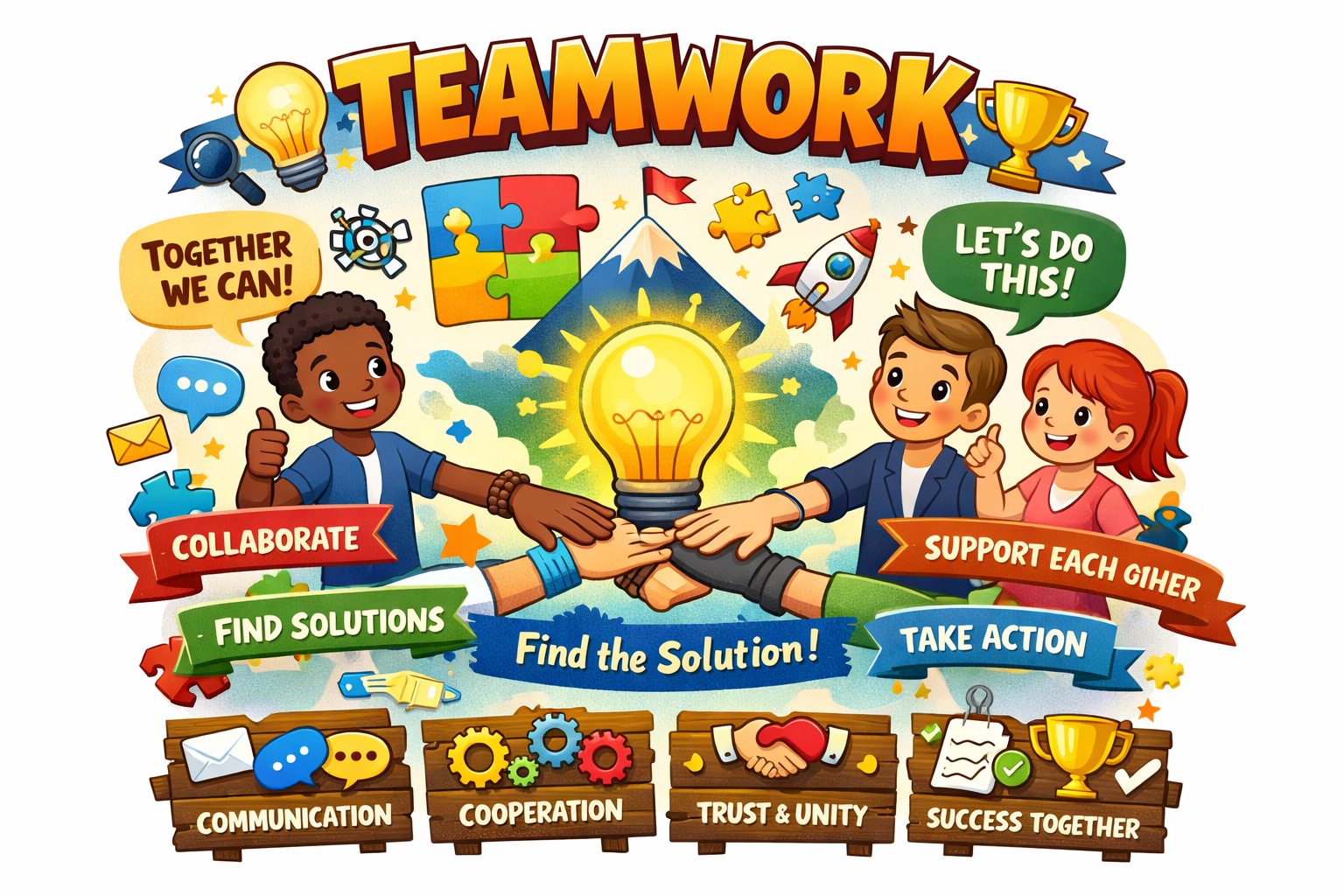
Teamwork refers to the collaborative effort of a group of individuals working together towards a common goal or objective. It involves individuals pooling their skills, knowledge, and resources, and coordinating their efforts to achieve a shared outcome. In teamwork, the focus is on synergy, cooperation, and mutual support, where the whole is greater than the sum of its parts.
Teamwork is the ability to work with others towards a common goal by sharing responsibilities, communicating clearly, supporting one another, and contributing positively to group success.
What is Teamwork?
Teamwork means working together with other people to complete a task or achieve a shared objective. In a team, every member contributes through their knowledge, effort, ideas, skills, and responsibility.
Good teamwork is not just about dividing work. It includes trust, cooperation, communication, respect, accountability, problem solving, and willingness to support others when needed.
| Situation | Poor Teamwork | Good Teamwork |
|---|---|---|
| Group project | Each person works separately without coordination. | Members divide tasks, communicate regularly, and combine work properly. |
| Deadline pressure | Members blame one another for delay. | Members identify pending work and support each other to finish on time. |
| Different opinions | One person dominates the discussion. | Everyone listens, discusses respectfully, and chooses the best idea. |
| Team member needs help | Others ignore the problem. | The team supports the member while maintaining the overall goal. |
“Teamwork succeeds when individual effort is connected to a shared goal.”
Collaboration Tip
Key points
- Understand the common goal.
- Clarify roles and responsibilities.
- Communicate regularly.
- Respect different opinions.
- Support team members when needed.
- Complete your assigned work on time.
- Focus on team success, not only personal credit.
Why is Teamwork Important?
Teamwork improves productivity, creativity, problem solving, communication, leadership, and workplace readiness. Many academic and professional tasks are completed better when people work together.
Shared Strengths
Different members bring different skills and ideas.
- Better knowledge sharing
- Improved creativity
- More complete solutions
- Balanced workload
Faster Completion
Work can be divided and completed efficiently.
- Clear task division
- Parallel work
- Quicker review
- Better time use
Better Problem Solving
Teams can discuss different approaches and choose better solutions.
- Multiple perspectives
- Idea comparison
- Risk identification
- Shared decision making
Professional Growth
Teamwork builds skills valued in jobs and leadership roles.
- Communication
- Leadership
- Accountability
- Conflict handling
Core Teamwork Skills
Effective teamwork requires a combination of communication, responsibility, cooperation, flexibility, trust, and problem solving.
| Skill | Meaning | Example | Good Practice |
|---|---|---|---|
| Communication | Sharing information clearly with team members. | Updating the team about task progress. | Use clear, timely, and respectful communication. |
| Cooperation | Working together instead of competing unnecessarily. | Helping a member complete a difficult part. | Support team goals over personal ego. |
| Responsibility | Completing assigned work properly and on time. | Submitting your project section before deadline. | Do what you promise and inform early if delayed. |
| Trust | Believing that members will act honestly and responsibly. | Relying on a member to complete their role. | Be consistent, honest, and dependable. |
| Respect | Valuing others’ ideas, time, and contribution. | Allowing each member to speak in a meeting. | Disagree politely without insulting. |
| Adaptability | Adjusting when plans, roles, or situations change. | Taking up a new task when project needs change. | Stay flexible and solution-focused. |
| Conflict Management | Handling disagreements constructively. | Discussing the issue instead of blaming. | Focus on the problem, not the person. |
| Accountability | Taking ownership of one’s work and results. | Accepting responsibility for an incomplete task. | Report progress honestly and correct mistakes. |
Note: Teamwork is not passive participation. It requires active contribution and responsible behaviour.
Mini Teamwork Strategy Bank
Tip: A good team member is not the one who speaks the most, but the one who contributes reliably.
Stages of Teamwork
Teams usually move through different stages before becoming effective. Understanding these stages helps members handle confusion, conflict, and performance pressure.
| Stage | Meaning | Common Behaviour | What the Team Should Do |
|---|---|---|---|
| Forming | The team comes together and understands the task. | Members are polite but uncertain. | Clarify goal, roles, and expectations. |
| Storming | Differences, doubts, and conflicts may appear. | Members may disagree about ideas or roles. | Discuss openly and resolve conflict respectfully. |
| Norming | The team starts creating rules and working patterns. | Members cooperate better and understand responsibilities. | Build trust, communication, and shared standards. |
| Performing | The team works effectively towards the goal. | Members contribute confidently and solve problems. | Maintain focus, quality, and progress review. |
| Adjourning | The task is completed and the team reflects. | Members review outcomes and learning. | Appreciate effort and record improvements for next time. |
Common Roles in a Team
A successful team often includes people performing different roles. One person may handle more than one role, depending on the task and team size.
| Role | Contribution | Example Behaviour |
|---|---|---|
| Leader / Coordinator | Guides the team, clarifies direction, and monitors progress. | “Let us divide the work and review tomorrow.” |
| Idea Generator | Suggests creative options and new approaches. | “Can we present this using a simple demo?” |
| Implementer | Turns ideas into action and completes tasks. | Prepares slides, reports, code, or working material. |
| Researcher | Collects facts, examples, references, or data. | Finds relevant information for the project. |
| Reviewer | Checks quality, errors, and completeness. | Reviews final output before submission. |
| Supporter | Encourages cooperation and helps members stay motivated. | Helps a member who is struggling with a task. |
Note: A team works better when roles are clear but flexible enough to adjust when needed.
Good Teamwork and Poor Teamwork
| Area | Good Teamwork | Poor Teamwork | Impact |
|---|---|---|---|
| Communication | Regular updates and clear discussion. | Silence, assumptions, or unclear messages. | Clarity vs confusion. |
| Responsibility | Members complete assigned work on time. | Members delay or avoid tasks. | Progress vs missed deadlines. |
| Decision Making | Ideas are compared logically. | One person forces all decisions. | Better judgement vs resentment. |
| Conflict | Issues are discussed respectfully. | Blaming, arguing, or avoiding completely. | Resolution vs tension. |
| Trust | Members are reliable and honest. | Members hide delays or give excuses. | Confidence vs suspicion. |
| Final Output | Work is reviewed and integrated properly. | Parts are joined at the last minute without checking. | Quality vs errors. |
Note: Teamwork quality is visible in communication, role clarity, responsibility, and the final output.
Step-by-Step Teamwork Process
Teamwork becomes more effective when the team follows a clear process from goal setting to final review.
| Step | Action | Question to Ask |
|---|---|---|
| 1. Understand Goal | Clarify what the team must achieve. | What is the final expected result? |
| 2. Define Roles | Assign responsibilities based on ability and availability. | Who will do what? |
| 3. Plan Timeline | Set deadlines for each part of the work. | By when should each task be completed? |
| 4. Communicate Progress | Share regular updates and difficulties. | Is everyone on track? |
| 5. Solve Problems | Handle delays, confusion, or conflict early. | What is blocking progress? |
| 6. Integrate Work | Combine individual parts into one final output. | Does everything fit together properly? |
| 7. Review Quality | Check errors, consistency, and completeness. | Is the final output ready? |
| 8. Reflect | Review what the team learned. | What can we improve next time? |
Practice
A) Multiple Choice Questions
-
Teamwork means:
working alone without communication working together towards a common goal avoiding responsibility competing with team members always
-
Which is a key requirement for good teamwork?
unclear roles regular communication last-minute confusion blaming others
-
In a team, accountability means:
hiding mistakes taking ownership of assigned work avoiding deadlines doing only easy tasks
-
During team conflict, the best response is to:
blame one member immediately avoid discussion forever discuss the issue respectfully and find a solution stop working completely
-
A reliable team member:
misses deadlines without informing completes promised work and updates the team keeps all problems hidden waits for others to do all work
B) Situation-Based Practice
- Your team has a project due in one week. What should the team do first? (Hint: clarify goal, divide tasks, set deadlines.)
- One member is not completing assigned work. How should the team handle it? (Hint: discuss respectfully, understand reason, adjust plan if needed.)
- Two members disagree about the best idea. What is the teamwork approach? (Hint: compare ideas based on goal, time, quality, and feasibility.)
- Your part of the work is delayed. What should you do? (Hint: inform early, explain honestly, and suggest a recovery plan.)
- The final project has sections written in different styles. What should the team do? (Hint: integrate, review, and standardise the final output.)
C) Match the Teamwork Skill with Its Use
| Teamwork Skill | Use |
|---|---|
| Communication | Sharing updates, ideas, and concerns clearly |
| Responsibility | Completing assigned work properly and on time |
| Trust | Creating confidence that members will do their part |
| Adaptability | Adjusting when roles, plans, or conditions change |
| Conflict management | Resolving disagreements constructively |
Teamwork Reminder
Teamwork is a practical skill that helps people achieve more together than they can alone. A strong team works with a common goal, clear roles, open communication, trust, respect, responsibility, and regular review. Good teamwork prepares students and professionals for real-life collaboration and leadership.
Task: Think of one team activity you participated in. Write what worked well, what did not work well, and what you would improve next time.
Show Suggested Answers
Multiple Choice
- working together towards a common goal
- regular communication
- taking ownership of assigned work
- discuss the issue respectfully and find a solution
- completes promised work and updates the team
Situation-Based Practice: Sample Answers
- Clarify the final goal, divide the project into tasks, assign roles, set deadlines, and schedule regular progress reviews.
- Speak respectfully with the member, understand the reason for delay, offer support if needed, and revise responsibilities or deadlines realistically.
- Compare both ideas based on the project goal, available time, quality, cost, and feasibility, then choose the better option as a team.
- Inform the team early, explain the delay honestly, give a revised timeline, and ask for help if required.
- Combine all sections, standardise formatting and tone, review for errors, and make the final output consistent.
Skill Matching
- Communication → Sharing updates, ideas, and concerns clearly
- Responsibility → Completing assigned work properly and on time
- Trust → Creating confidence that members will do their part
- Adaptability → Adjusting when roles, plans, or conditions change
- Conflict management → Resolving disagreements constructively
Clue Explanation
Effective teamwork includes shared goals, clear roles, communication, cooperation, accountability, trust, conflict management, and final review. A good team member contributes responsibly and supports the success of the whole team.
Practical tips
- Understand the team goal before starting work.
- Clarify your role and deadline.
- Give regular progress updates.
- Listen to others’ ideas respectfully.
- Complete your assigned work reliably.
- Ask for help early if you are stuck.
- Resolve conflicts by focusing on the task.
- Review the final output together before submission.
Select a topic and chapter from the left menu.